ABA Therapy for Autism: What It Is, How It Works, and Who It's For
By Maria Paula Arciniegas, BCBA | Aldea Medically reviewed by Michelle McGuinness, M.A., CCC-SLP |
Direct Answer
ABA therapy (Applied Behavior Analysis) is the most extensively researched behavioral intervention for autism spectrum disorder. It uses the science of learning and behavior to teach communication, social, adaptive, and daily living skills delivered through play-based, child-centered sessions designed around what motivates your specific child. Modern ABA looks nothing like the rigid, drill-based approach it is sometimes associated with. Today's best ABA programs are naturalistic, relationship-focused, and built around building meaningful skills not compliance or making autistic children appear neurotypical. ABA is most effective when started early, delivered by a well-supervised BCBA-led team, and combined with parent coaching so the skills your child builds in therapy carry over into real life.
Key Takeaways
ABA is the only autism intervention recognized as evidence-based by the U.S. Surgeon General, the American Psychological Association, and the American Academy of Pediatrics
Modern ABA is play-based, naturalistic, and child-centered not the table-drill approach sometimes associated with older ABA descriptions
Every ABA program is individualized goals are built entirely around your child's specific strengths, needs, and motivators
A Board Certified Behavior Analyst (BCBA) designs and oversees the program; Registered Behavior Technicians (RBTs) deliver direct therapy under BCBA supervision
Research supports 25–40 hours per week for young children with significant support needs; older children or those with focused goals may receive 10–20 hours
Parent involvement is a core component skills generalize most effectively when practiced throughout daily life at home
In all 50 states, insurance is required to cover ABA therapy for children with an autism diagnosis
The quality of the provider matters as much as the therapy itself knowing what to look for protects your child and your investment
What Is ABA Therapy?
Applied Behavior Analysis (ABA) is a scientific approach that applies the principles of learning and behavior to teach meaningful skills and support development. In autism treatment, ABA uses structured reinforcement strategies to build communication, social interaction, adaptive behavior, and daily living skills while also addressing behaviors that interfere with learning and safety.
The foundational principle is straightforward: behavior is shaped by its consequences. When a behavior is followed by something positive a reward, praise, a preferred activity that behavior becomes more likely to occur again. ABA applies this principle in a highly individualized, data-driven way to help children learn skills that are genuinely challenging for them.
This is not a radical idea. It is the same mechanism behind how all humans learn. ABA simply applies it systematically, with consistent measurement and ongoing adjustment, to areas of development where autistic children need the most support.
What ABA Is and Is Not
ABA is:
An individualized, data-driven approach to teaching skills and supporting behavior
Delivered by BCBA-supervised professionals trained in the science of learning
Continuously adjusted based on your child's progress data
A framework that encompasses many specific techniques not one rigid method
ABA is not:
A one-size-fits-all curriculum
Exclusively focused on eliminating behaviors skill-building is its primary purpose
The same as it was in early decades modern ABA is naturalistic, play-based, and relationship-centered
An attempt to make autistic children appear neurotypical ethical ABA builds meaningful skills that support independence and quality of life
What Does the Research Say?
ABA has the most extensive research base of any autism intervention. Decades of studies including multiple systematic reviews and meta-analyses have consistently demonstrated that high-quality ABA produces meaningful improvements in language, communication, social skills, adaptive behavior, and cognitive functioning in autistic children.
Key research findings:
A landmark meta-analysis published in the Journal of Clinical Child and Adolescent Psychology (Virués-Ortega, 2010) found that early intensive behavioral intervention produced large, significant improvements in language, adaptive behavior, and intellectual functioning with the strongest gains in children who began before age 4
Research consistently shows that children who begin ABA before age 3 show greater gains than children who begin at ages 4 or 5 (Lovaas, 1987; Reichow, 2012)
The Early Start Denver Model (ESDM) — a naturalistic ABA approach showed in a landmark randomized controlled trial (Dawson et al., 2010) that children receiving early intensive intervention showed significantly greater gains in IQ, language, and adaptive behavior than a comparison group, with brain imaging showing normalized patterns of social brain activity
A Cochrane review of early intensive behavioral intervention found moderate to strong evidence for improvements in adaptive behavior, language, and daily living skills (Reichow et al., 2012)
ABA is the only autism intervention formally recognized as evidence-based by the U.S. Surgeon General, the American Psychological Association, and the American Academy of Pediatrics.
Citation note: Virués-Ortega, J. (2010). Applied behavior analytic intervention for autism in early childhood. Clinical Psychology Review, 30(4), 387–399. | Dawson, G. et al. (2010). Randomized controlled trial of an intervention for toddlers with autism. Pediatrics, 125(1), e17–e23. | Reichow, B. et al. (2012). Early intensive behavioral intervention for young children with autism spectrum disorders. Cochrane Database of Systematic Reviews.
How Has ABA Evolved?
This is the question most parents need answered before they can feel confident about ABA — because what many people picture when they hear "ABA" is not what modern, ethical ABA looks like.
Early ABA programs, developed in the 1960s and 1970s, were heavily structured, repetitive, and in some cases used aversive techniques that are not part of contemporary practice and are explicitly rejected by current ethical standards. The autistic adult community has raised important and legitimate concerns about these historical approaches — and the field has listened and evolved.
Modern, high-quality ABA looks fundamentally different:
Naturalistic and play-based learning is embedded in preferred activities and everyday routines, not isolated table drills
Child-led the child's interests, motivators, and pace drive the session
Relationship-centered the therapeutic relationship between the child and their RBT is foundational, not incidental
Focused on meaningful outcomes goals are about communication, independence, connection, and quality of life not appearance of neurotypicality
Autonomy-respecting children's assent and comfort matter; stimming is not automatically targeted for elimination
The question is never simply whether your child receives ABA. It is who delivers it, with what philosophy, and whether your child's dignity and wellbeing are centered throughout.
How ABA Therapy Is Delivered
ABA is not one single method. It is a broad scientific framework that encompasses several different approaches and delivery models. The best programs blend these based on the individual child's needs and goals.
Discrete Trial Training (DTT)
The most structured ABA format. Skills are broken into small components and taught through repeated practice the therapist presents an instruction, the child responds, and the child receives reinforcement for correct responses. DTT is effective for building foundational skills like following instructions, matching, identifying objects, and early language. Used well, it is a powerful tool. Used exclusively or rigidly, it can feel decontextualized — which is why good programs blend it with naturalistic approaches.
Naturalistic Developmental Behavioral Interventions (NDBIs)
Where modern ABA has moved significantly. Approaches like Pivotal Response Treatment (PRT), the Early Start Denver Model (ESDM), and natural environment teaching embed learning in everyday play and routines. Goals are addressed in the context of what the child is naturally motivated by. A child working on language might practice requesting during a preferred toy activity, commenting during a book, or greeting during arrival at the clinic all embedded in meaningful interaction. NDBIs have strong and growing research support and are the preferred approach for most young children.
Comprehensive vs. Focused ABA
Comprehensive ABA is intensive typically 25–40 hours per week and addresses a wide range of developmental domains simultaneously. Most often recommended for young children (ages 2–5) with significant support needs across communication, social skills, and adaptive behavior.
Focused ABA addresses one or a few specific goals a particular behavior, a specific skill, or a targeted challenge. Typically 10–20 hours per week. Often a better fit for older children or children with more circumscribed needs.
What a Session Actually Looks Like
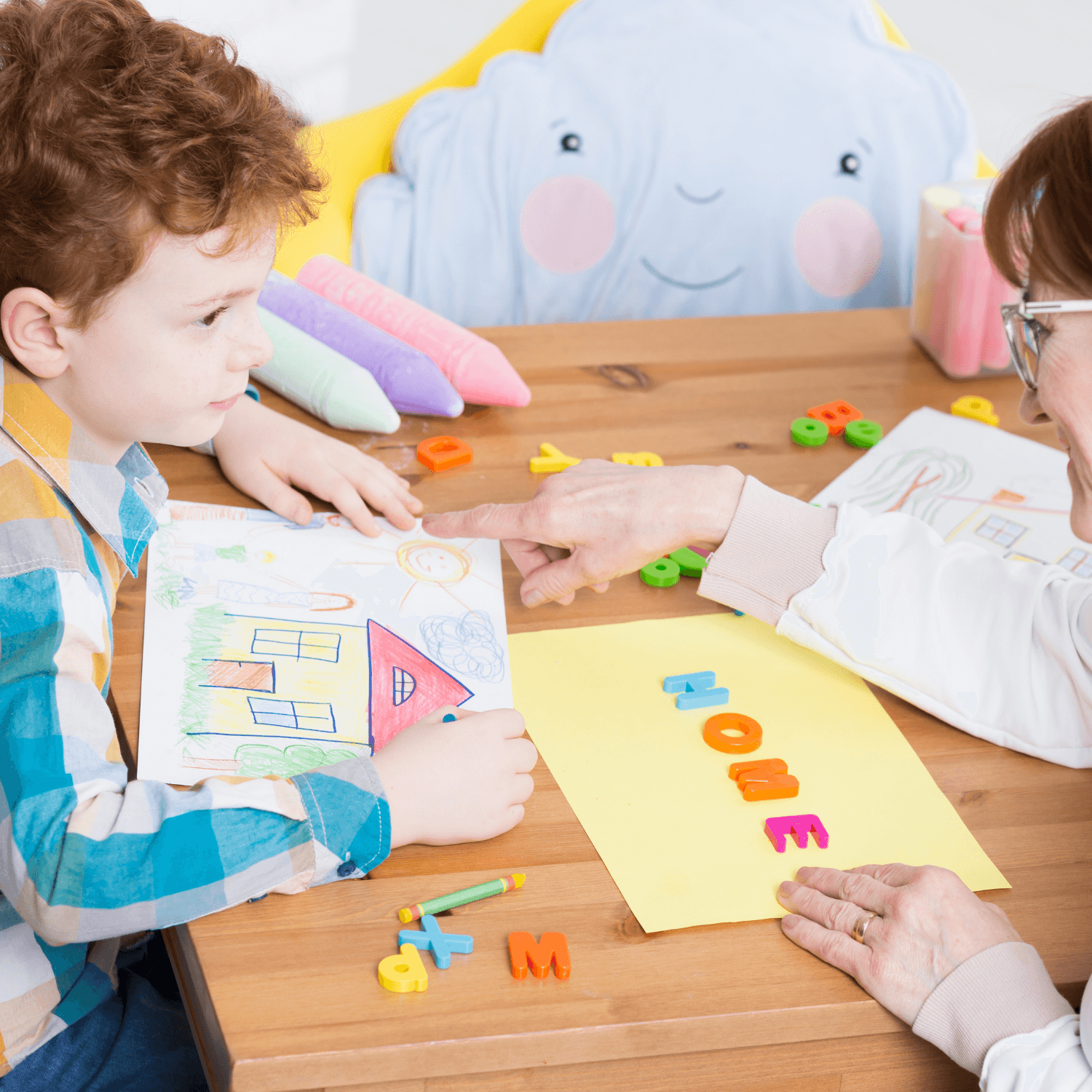
For a young child in a center-based program, a typical session might look like:
Arrival and warm greeting from the RBT
Natural play activity building blocks, toy trains, puzzles with language and social targets embedded naturally ("push!" "more!" "my turn")
Brief structured skill practice matching, identifying colors, practicing a social greeting
Data recorded on every target throughout the session
Session ends with a preferred activity
The common thread is individualization. Every session is built around your specific child — their strengths, their challenges, their motivators, their goals.
What ABA Targets
ABA programs address the full range of developmental needs. Common target areas include:
Communication and Language
Requesting wants and needs (verbally, through AAC, or picture exchange)
Labeling objects, actions, and attributes
Following directions and responding to questions
Back-and-forth conversational exchanges
Functional communication for minimally verbal children
Social Skills
Eye contact and joint attention
Initiating and responding to social greetings
Turn-taking in play and conversation
Reading social cues — facial expressions, body language, tone
Peer interaction and friendship skills
Adaptive and Daily Living Skills
Toileting and hygiene routines
Dressing, grooming, and self-care
Mealtime behavior and food acceptance
Safety skills and community participation
Reducing Behaviors That Interfere with Learning
Self-injurious behavior
Aggression or property destruction
Elopement
Extreme emotional dysregulation
Important: Modern ABA does not aim to eliminate all autistic behavior. Target behaviors for reduction are specifically those that create safety risks, cause physical harm, or significantly impair a child's ability to learn and participate in daily life.
The Parent Role in ABA
Parent involvement is not supplementary it is a core component of effective ABA. Your child spends the majority of their waking hours outside of therapy. Skills learned in sessions generalize most effectively when they are practiced, reinforced, and supported throughout the rest of the day at home.
What parent involvement looks like in practice:
Parent training sessions your BCBA teaches you the behavioral principles underlying the program, the specific teaching procedures being used, and how to implement them in daily routines
Coaching during sessions observing sessions, asking questions, and practicing techniques with therapist feedback
Home practice implementing targeted skills throughout daily routines: meals, bath time, play, community outings
Participating in goal planning your priorities for your child shape the direction of the program
A good ABA program treats you as your child's most important practice partner because you are.
Signs of a High-Quality ABA Program
Not all ABA is equal. When evaluating providers, look for these markers of quality:
✓ Goals are functional and meaningful about communication, independence, and connection, not about appearing neurotypical
✓ Your child's assent matters the child is engaged and comfortable, not just compliant
✓ Data is collected and reviewed regularly the BCBA adjusts the program based on what the data shows
✓ Parent training is a core component you are coached alongside your child
✓ No aversive techniques ever. Physical punishment or withholding of basic needs are unacceptable
✓ Stimming is not automatically targeted self-regulatory behavior is assessed for function, not eliminated by default
✓ The program feels warm and child-centered your child should want to go to therapy
Questions to ask a prospective provider:
How often does the BCBA directly observe sessions?
What is the BCBA-to-RBT supervision ratio?
How are goals developed can parents participate?
What is your philosophy on stimming and autistic identity?
What does parent training look like in your program?
Who Is ABA For?
ABA is most commonly recommended for children with an autism spectrum disorder diagnosis and is most effective when started early ideally between ages 2 and 5 when brain plasticity is highest. However, ABA can benefit children at any age, and focused approaches are used with older children and adolescents.
ABA may be a good fit if your child:
Has received an autism diagnosis with significant support needs in communication, social skills, or daily living
Is between ages 2 and 5 and would benefit from early intensive intervention
Has specific behavioral challenges requiring structured support
Has a focused skill or behavioral goal that targeted ABA could address
ABA is not the only path. Other evidence-based approaches — speech therapy, occupational therapy, ESDM, Floortime — are valuable, and many children benefit most from a coordinated combination. The right intervention is the one that fits your child's needs, your family's values, and your child's experience of the therapy itself.
Does Insurance Cover ABA?
Yes — in all 50 states. All states now have insurance mandates requiring coverage of ABA therapy for children with an autism diagnosis. Coverage specifics vary by state and plan, but ABA is generally considered medically necessary.
Before starting services, ask your insurance company:
Is ABA therapy covered under my plan for an autism diagnosis?
Do I need prior authorization before services begin?
How many hours per week are covered? Is there an annual cap?
What will my copay, coinsurance, or deductible be?
Is this provider in-network?
Most ABA providers have insurance specialists who will handle prior authorization on your behalf — ask about this when you contact a provider.
Common Misconceptions About ABA
"ABA is just about stopping bad behaviors."
ABA's primary purpose is skill-building teaching communication, social interaction, play, and daily living skills. Behavior reduction is one component and specifically targets behaviors that cause harm or significantly impair functioning. The majority of ABA session time is devoted to building skills, not managing behavior.
"ABA will try to change who my child is."
Ethical modern ABA does not aim to make autistic children neurotypical. The goal is to build skills that support independence, communication, and quality of life and to give your child more tools to connect with the world in ways that are meaningful to them.
"My child is too verbal for ABA."
Verbal ability does not determine ABA eligibility or need. Many verbal autistic children benefit significantly from ABA targeting social communication, flexible thinking, emotional regulation, and adaptive daily living skills.
"ABA has to be 40 hours a week to work."
Forty hours per week is the intensity associated with the strongest gains in early intensive intervention research. It is not the only effective intensity. Children with focused goals or older children may receive 10–20 hours with meaningful outcomes.
"ABA is only for young children."
ABA is used across the lifespan. Early childhood is the highest-impact window, but focused ABA approaches support meaningful skill development in older children, adolescents, and adults.
When to Pursue ABA
Pursue ABA promptly if your child:
Has received an autism diagnosis and has significant support needs in communication, social skills, or daily living
Is between ages 2 and 5 — early intervention during this window produces the strongest outcomes
Shows self-injurious behavior, aggression, or safety-related behaviors that need structured support
Consider focused ABA if your child:
Is older with specific, circumscribed skill or behavioral goals
Has plateaued in other therapies and needs a structured data-driven approach to a specific challenge
While waiting for ABA services:
Pursue Early Intervention (for children under 3) — free, no referral required
Begin speech-language therapy and occupational therapy — these complement ABA and do not require waiting for ABA to start
Ask your BCBA about parent coaching while on the waitlist — many skills can be built through parent-implemented strategies
Frequently Asked Questions {#faq}
What does ABA therapy stand for?
ABA stands for Applied Behavior Analysis. It is a scientific approach that applies the principles of learning and behavior to teach meaningful skills and reduce behaviors that interfere with learning and daily functioning. In autism treatment, ABA uses individualized reinforcement strategies to build communication, social, adaptive, and cognitive skills. It is the most extensively researched behavioral intervention for autism and is recognized as evidence-based by the American Academy of Pediatrics and the U.S. Surgeon General.
How many hours of ABA does my child need?
For young children (under 5) with significant support needs, research supports 25–40 hours per week of early intensive behavioral intervention. Children with more focused or specific goals typically receive 10–20 hours per week. The appropriate intensity is determined by the BCBA based on your child's initial comprehensive assessment — not a standard formula. Insurance authorization also factors into the hours provided.
Is ABA therapy play-based?
Yes — modern ABA uses significant play-based, naturalistic teaching, particularly for young children. Natural Environment Teaching, Pivotal Response Treatment, and the Early Start Denver Model are all naturalistic ABA approaches that embed learning in preferred play activities and follow the child's lead. Sessions for toddlers and preschoolers are predominantly play-based. More structured Discrete Trial Training is used for specific foundational skill development alongside naturalistic approaches.
What is the difference between a BCBA and an RBT?
A BCBA (Board Certified Behavior Analyst) is a master's or doctoral level clinician who designs, oversees, and is clinically responsible for the ABA program. An RBT (Registered Behavior Technician) implements the program directly with your child under BCBA supervision. BCBAs hold a master's degree or higher, have completed supervised fieldwork, and have passed the BACB certification exam. RBTs complete a 40-hour training program and a competency assessment. Both credentials are regulated by the Behavior Analyst Certification Board (BACB).
How long does ABA therapy last?
ABA duration is not fixed. Many children receive intensive ABA from early childhood through early school years, with intensity decreasing as goals are met. Some children continue with focused ABA services into school age for specific skill targets. The BCBA reviews progress quarterly and recommends continuation, adjustment, or transition based on data. A responsible ABA program plans for fading services over time — not indefinite continuation.
Does ABA therapy work for autism?
ABA has the most extensive research base of any autism intervention and consistently produces meaningful improvements in communication, social skills, adaptive behavior, and cognitive functioning in autistic children (Virués-Ortega, 2010; Dawson et al., 2010; Reichow et al., 2012). Outcomes vary by child profile, program intensity and quality, age at onset, and family involvement. ABA produces the strongest outcomes when started early, delivered with sufficient intensity and quality supervision, and integrated with parent involvement and complementary therapies.
Is ABA covered by insurance?
Yes — all 50 states have insurance mandates requiring coverage of ABA therapy for children with a formal autism diagnosis. Most commercial insurance plans, Medicaid, and CHIP cover ABA as a medically necessary treatment. Prior authorization is typically required before services begin. Coverage levels, copays, and in-network requirements vary by plan. Most ABA providers have dedicated insurance staff who handle authorization on your behalf.
Can ABA and speech therapy happen at the same time?
Absolutely — and for most children, they should. ABA pairs powerfully with speech-language therapy, occupational therapy, and other supports. A good BCBA coordinates with your child's SLP and OT to align goals and ensure consistency across all settings. Skills targeted in ABA and speech therapy should reinforce each other, not operate in separate silos.
What should I look for in an ABA provider?
Key quality indicators include: a BCBA with appropriate credentials and a manageable caseload (verifiable at bacb.com), regular direct BCBA supervision of RBTs (at least weekly), individualized assessment-based goal development rather than a generic curriculum, structured parent training as a core component, naturalistic and play-based approaches alongside structured teaching, a clear data review and program adjustment process, and RBT training and retention practices that minimize turnover. Ask specifically about the provider's philosophy on stimming and autistic identity — the answers are revealing.
How Aldea Can Help
Finding a high-quality ABA provider — one with the right BCBA credentials, the clinical philosophy that aligns with your values, experience with your child's specific profile, and availability — is one of the most frustrating parts of the post-diagnosis process for most families. Waitlists are long. Provider directories are incomplete. And when you are already navigating a new diagnosis, the last thing you should have to do is call practice after practice hoping someone picks up.
Aldea helps families find licensed specialists — including BCBAs, speech-language pathologists, developmental pediatricians, and child psychologists — for evaluations, therapy, and developmental support, all in one place. Whether you are just starting to explore ABA options, you are on a waitlist and want to understand your alternatives, or you are questioning whether your current program is the right fit, Aldea helps you find the right provider and take a clear next step.
You do not need a referral. You do not need to have all the answers. A concern about your child is enough to start.
Find an ABA provider through Aldea →
Conclusion
ABA therapy is the most thoroughly researched intervention for autism — and when delivered with the right philosophy, the right supervision, and the right level of parent involvement, it builds the communication, social, and daily living skills that give autistic children more independence, more connection, and more confidence in navigating the world.
Modern ABA is play-based, child-centered, and built around your child's joy and motivators — not compliance or the appearance of neurotypicality. The goals are meaningful: helping your child communicate what they need, connect with the people they love, and move through daily life with greater ease.
Quality matters. Find a provider whose philosophy centers your child's dignity, whose BCBA is actively present and accessible, and whose program treats you as a partner in your child's progress.
If you are ready to take the next step, Aldea is here to help you find the right fit — faster and with far less frustration than navigating the process alone.
About the Author
Maria Paula Arciniegas, BCBA
Maria Paula Arciniegas is a Board Certified Behavior Analyst (BCBA) and the owner of Stepping Forward ABA, an organization committed to providing compassionate, evidence-based ABA services to children and families. With experience supporting children in both home and school settings, Maria Paula specializes in developing individualized programs that promote communication, social interaction, independence, attention, and adaptive daily living skills. She brings both clinical expertise and genuine warmth to her work with autistic children and their families, believing that the best ABA is built on relationship, respect, and a deep understanding of each child as an individual.
This article was written for informational and educational purposes by Aldea, a developmental and behavioral health navigation platform. It does not constitute medical advice or establish a clinical relationship. ABA therapy decisions should be made in consultation with a qualified BCBA or developmental specialist.