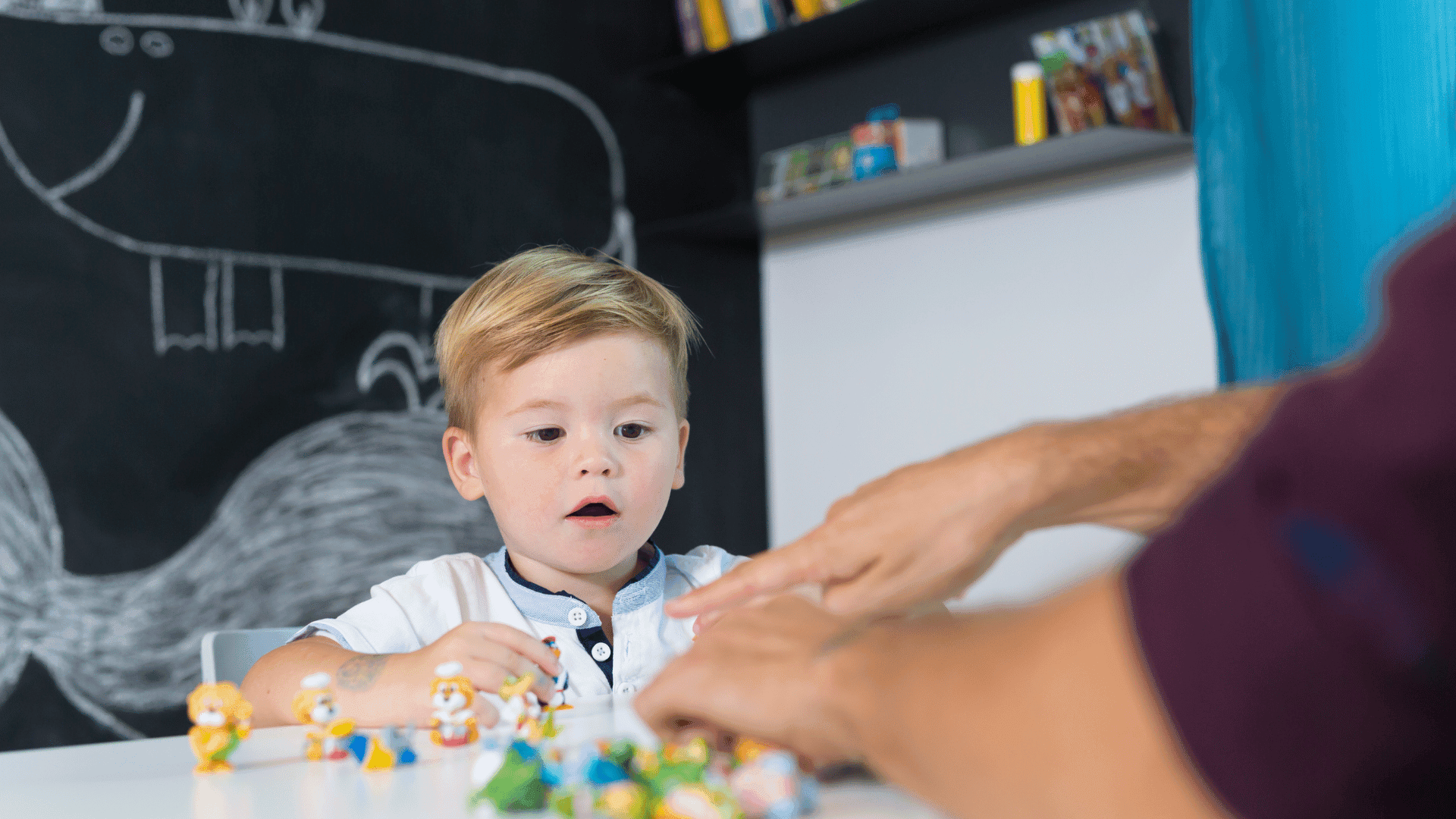
Supporting children with autism: How ABA therapy helps children thrive
By Michelle McGuinness, M.A., CCC-SLP | Aldea
What if the behaviors that worry you most are actually your child’s way of communicating?
A child who avoids certain activities, repeats movements, or communicates differently may not simply be “acting out.” These moments can reveal important information about how your child understands and responds to the world around them.
This may require an autism evaluation to uncover what those behaviors mean and identify the right support for your child’s development. With early guidance and personalized therapies such as Applied Behavior Analysis (ABA), you can help your kid build communication skills, confidence, and independence in ways that fit their unique needs.
At Aldea Center for Development, we guide families through the autism evaluation and diagnosis process, then connect them with trusted ABA therapy providers and specialists throughout Florida.
Why an autism evaluation is the first step
When you notice differences in your child’s communication, play, learning, or behavior, you may seek an autism evaluation to explain what you’re seeing and what support may be helpful.
A professional evaluation looks beyond individual behaviors and considers how your child communicates, connects with others, processes information, and responds to their environment.
Aldea’s licensed psychologists and speech-language pathologists complete comprehensive evaluations that explore areas such as:
Communication and social skills: how your child uses words, gestures, facial expressions, and interactions to connect with others.
Play and imitation skills: how your child engages with toys, pretend play, and learning through watching and copying others.
Emotional regulation: how your child manages feelings, transitions, frustration, and changes in routine.
Repetitive behaviors and sensory differences: patterns of movement, interests, sounds, or responses to sights, textures, and other sensations.
After an evaluation, you may explore specific supports such as ABA therapy, speech therapy, and occupational therapy, based on the reports received.
What ABA therapy is and how it helps
Applied Behavior Analysis (ABA) is a research-supported therapy that helps children with autism build skills that support communication, learning, independence, and everyday activities.
ABA focuses on understanding how children learn and using structured strategies to help them develop skills step by step.
ABA breaks larger goals into smaller, teachable steps—instead of expecting a child to master a new skill all at once, therapists create manageable learning opportunities that build confidence over time.
During ABA sessions, therapists use strategies like structured play, positive reinforcement, and ongoing progress tracking to understand what works best for each child. These approaches help children practice new skills in ways that feel meaningful and connected to their daily lives.
ABA therapy may help children:
Improve communication skills: supporting children as they learn to express needs, share ideas, respond to others, and develop language.
Strengthen social interaction and play: helping children practice skills such as taking turns, joining activities, and engaging with family members or peers.
Build attention and independence: teaching children how to complete tasks, follow routines, and participate more confidently in everyday activities.
Reduce frustration and challenging behaviors: identifying what may trigger difficult moments and teaching more effective ways to communicate or cope.
Develop routines and coping strategies: creating predictable patterns that help children manage transitions and new experiences.
ABA works best when therapy connects with a child’s real world—skills learned during sessions can be practiced during meals, playtime, school activities, and family routines.
At Aldea, we collaborate with ABA therapy providers throughout Florida to help families access services after evaluation.
We know starting therapy can feel overwhelming, so we guide families through the process and connect them with trusted providers as they begin their child’s support journey.
ABA therapy in action: Everyday skills that make a difference
The major goals for ABA therapy are personalized based on each child’s strengths, challenges, and developmental needs. Some children may work on communication skills, while others may focus on independence, social interaction, or managing changes in their routine.
Common ABA therapy goals may include:
Following directions: helping children understand instructions and complete tasks with greater confidence.
Taking turns and sharing: building social skills that support positive interactions with siblings, classmates, and friends.
Expressing needs and emotions: teaching children ways to communicate feelings, requests, and preferences more effectively.
Using visual supports: providing tools such as pictures, schedules, or reminders that make routines easier to understand.
Playing cooperatively: encouraging children to participate in shared activities and develop relationships with others.
Building independence in daily routines: supporting skills such as feeding, dressing, toileting, hygiene, and completing age-appropriate tasks.
Progress from an ABA program grows through small daily achievements like learning to communicate a need, complete a routine, or handle a transition more comfortably, which can create meaningful changes for your child.
Integrating ABA with other therapies
A child with autism might benefit from different supports, and not just ABA therapy alone. Children with autism often have different areas where they may benefit from support.
ABA therapy can work alongside other services to address communication, sensory needs, emotional development, and daily functioning.
The other supports you can provide your child, in conjunction with ABA therapy, include:
Speech therapy: supporting language development, communication skills, articulation, and feeding concerns.
Occupational therapy: helping children develop fine motor skills, sensory processing strategies, and independence with daily activities.
Psychological services: providing support for concerns such as ADHD, anxiety, emotional regulation, and other developmental needs.
Although each therapy has its own focus, combining services can help children practice skills in different environments. For example, a communication strategy introduced during speech therapy can also be reinforced during ABA sessions, at school, and at home.
And the consistency across settings makes your child feel supported. When parents, therapists, and educators use similar approaches, children have more opportunities to practice and strengthen new skills.
What parents can do at home
You don’t need to be a therapist to create supportive moments at home. Small changes in everyday routines can give your child more opportunities to communicate, learn, and participate.
You can turn daily routines into learning opportunities with your kid—mealtimes, play, getting dressed, and bedtime routines all provide natural moments to practise skills your child is developing.
Here are other simple ways to support your child at home:
Use positive reinforcement: recognize your child’s efforts and celebrate progress with encouragement such as “You did it” or “Great job trying.”
Give clear, simple directions: use short instructions, gestures, or visual cues to make tasks easier to understand.
Offer structured choices: give your child opportunities to make decisions, such as choosing between a blue cup or a red cup, while keeping the options manageable.
Model calm responses: demonstrate breathing techniques, quiet breaks, or other coping strategies your child can use during challenging moments.
Create predictable routines: visual schedules and consistent patterns can help children understand what comes next and feel more prepared for transitions.
Always have in mind that consistency matters more than perfection when helping your child, so repeating supportive strategies during everyday activities helps children strengthen skills over time.
When parents and therapy teams work together, children receive more opportunities to practice what they learn in different environments. ABA providers can also guide families on how to use strategies that match their child’s goals and development.Why families choose
Locate an ABA therapy support with Aldea
Finding the right support for your child can feel overwhelming, especially when you are searching for answers about development, therapy options, and next steps. Aldea Center for Development helps simplify the process by supporting families from the first evaluation through ongoing care coordination.
Aldea helps families in Florida move from questions to clear next steps by providing evaluations, guidance, and connections to trusted specialists so families can access appropriate support.
Families choose Aldea for support with:
Autism and ADHD evaluations: completed by licensed psychologists who assess your child’s developmental needs.
Care coordination with ABA providers: helping families connect with trusted therapy providers throughout Florida.
Speech and language support: addressing communication goals that complement behavioral and developmental services.
Flexible scheduling options: offering accessible care options, including virtual services where appropriate.
Insurance-friendly care pathways: helping families understand available options for accessing recommended services.
Every child’s path looks different, and finding the right support starts with understanding your child’s needs. Whether you live in Orlando, Miami, Tampa, or another Florida community, Aldea is here to help you take the next step from evaluation to treatment with guidance you can trust.
Frequently asked questions
1. What age should my child have an autism evaluation?
An autism evaluation can be helpful whenever you notice developmental concerns, including differences in communication, social interaction, play, or behavior. Early evaluation allows families to better understand their child’s needs and explore appropriate supports as soon as possible.
How does ABA therapy help children with autism?
ABA therapy helps children build practical skills through structured learning, positive reinforcement, and individualized goals. It can support communication, social interaction, independence, emotional regulation, and daily routines by breaking skills into smaller, manageable steps.
Can ABA therapy be combined with speech or occupational therapy?
Yes. Many children benefit from a coordinated approach that combines ABA with other therapies. Speech therapy can support communication, while occupational therapy can address sensory needs, motor skills, and daily activities. Working together helps children practise skills across different environments.