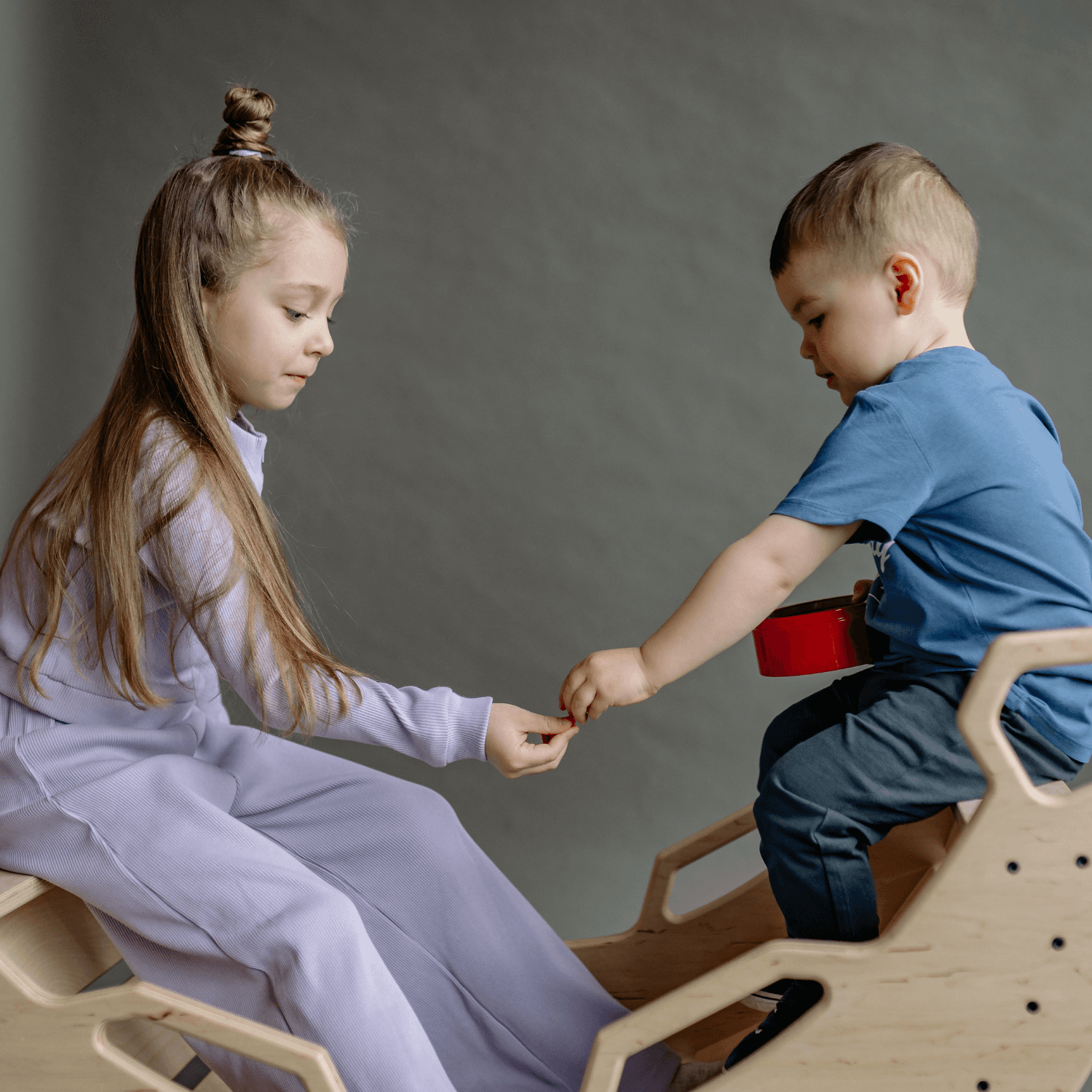
Social Communication: The Hidden Piece Parents Often Miss and Why Your Child's SLP Is the Key
By Michelle McGuinness, M.A., CCC-SLP | Aldea
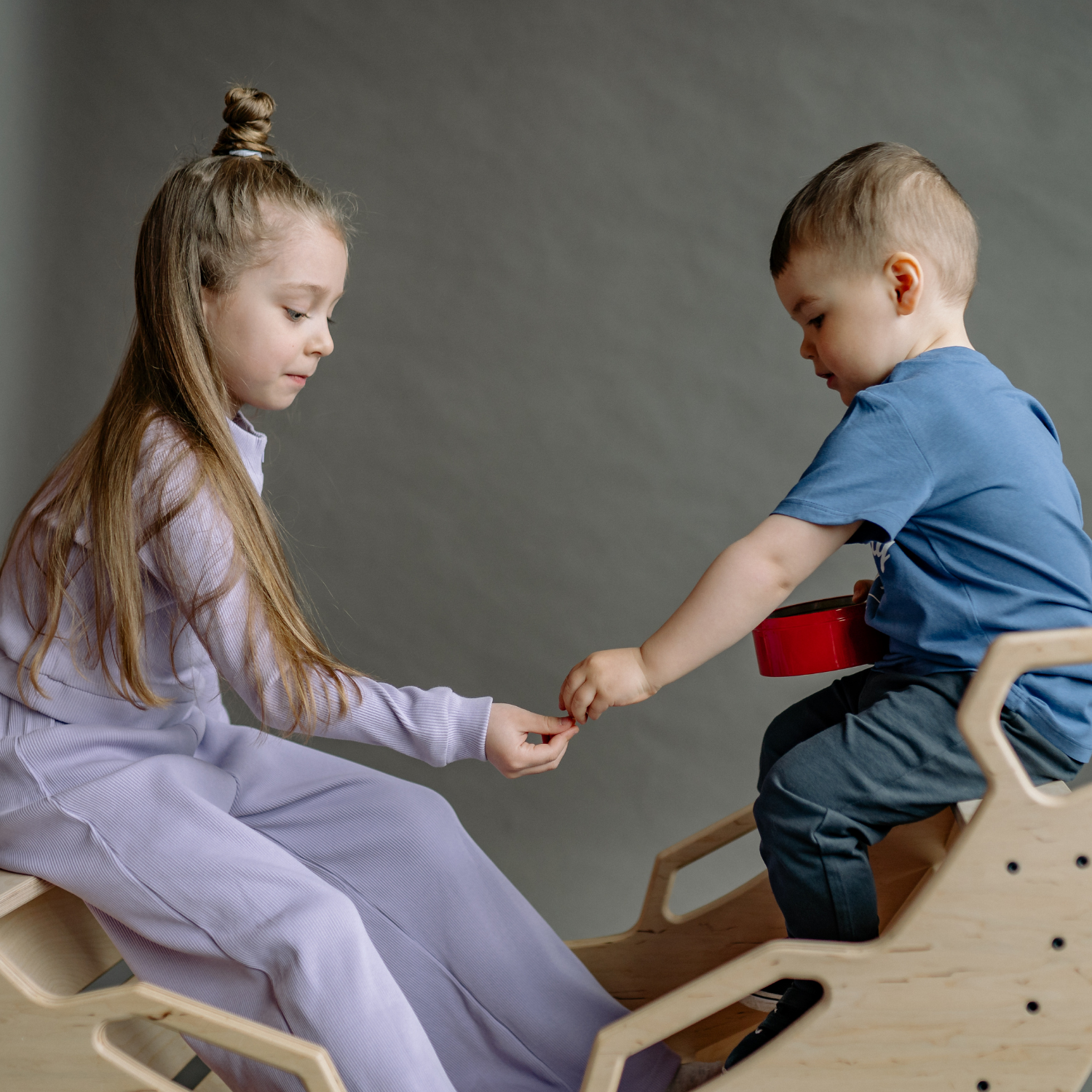
Your child speaks clearly. Their vocabulary seems fine. They answer your questions, follow directions, and hold a basic conversation.
And yet something feels off. Maybe they say things that seem socially awkward or out of place. Maybe they struggle to make or keep friends despite genuinely wanting connection. Maybe they take everything literally, miss the joke, or seem unaware that a conversation is a two-way exchange. Maybe teachers have commented that they seem to talk "at" people rather than "with" them.
If this sounds familiar, you may be looking at a social communication difficulty and it is one of the most commonly missed, most commonly misunderstood areas in the entire field of child development.
This article explains what social communication is, why it matters, what it looks like when it breaks down, and why a Speech-Language Pathologist is your most important first call.
What Is Social Communication?
Social communication also called pragmatic language is the ability to use language effectively in social contexts. It is not about how many words your child knows or how clearly they speak. It is about how they use language with other people.
Social communication encompasses:
Taking turns in conversation knowing when to speak, when to listen, and how to keep the exchange going
Staying on topic following the thread of a conversation rather than shifting abruptly to unrelated topics
Reading the room adjusting what you say and how you say it based on the listener, the setting, and the social context
Understanding nonliteral language grasping sarcasm, humor, idioms, and implied meaning rather than taking everything at face value
Interpreting nonverbal cues reading facial expressions, body language, and tone of voice as part of the communicative message
Understanding perspective recognizing that other people have thoughts, feelings, and intentions that may differ from your own
Initiating and maintaining relationships using communication as a tool for genuine social connection
When these skills are underdeveloped, children can struggle significantly not because they are not intelligent, not because they do not care about people, but because the social use of language is genuinely difficult for them in ways that are not always visible from the outside.
Social Communication Disorder: What It Is and Who It Affects
Social (Pragmatic) Communication Disorder, or SPCD, is a recognized diagnostic category that describes children who have significant difficulty with the social use of language without the structural language deficits seen in developmental language disorder, and without the broader characteristics of autism spectrum disorder.
In other words, these children may have age-appropriate grammar and vocabulary, speak clearly, and score well on traditional language tests — and still have significant social communication difficulties that affect their relationships, their academic performance, and their emotional wellbeing.
The presence of significant and persistent social communication difficulties in middle childhood is associated with adverse outcomes such as behavioral difficulties in adolescence, challenges in sustaining peer relations, successful employment, and later mental health conditions.
A 2025 scoping review published in Healthcare confirmed what clinicians working in this space have long observed: communication disorders in childhood, including pragmatic impairments, have been consistently linked to mental health challenges such as anxiety, depression, and behavioral difficulties.
This is why early identification and support is so important. Social communication difficulties do not always resolve on their own and the longer they go unaddressed, the more they compound into broader social, emotional, and academic challenges.
The Signs That Are Easy to Miss
Social communication difficulties are notoriously easy to overlook especially in children who are verbal, bright, and articulate in structured settings. Teachers may not flag it. Pediatricians may not catch it. Parents are often the first to sense that something is different, even when they cannot name exactly what.
Signs that your child may have social communication challenges:
In conversation:
They talk at length about their interests without noticing the other person has disengaged
They have difficulty starting or ending conversations naturally
They struggle to stay on topic shifting abruptly to unrelated subjects
They interrupt frequently without awareness of the social impact
They respond to questions with answers that are technically correct but socially off
In understanding language:
They take everything literally missing sarcasm, jokes, metaphors, and implied meaning
They seem confused by indirect requests ("Can you close the door?" is interpreted as a yes/no question)
They have difficulty understanding that what someone says is not always what they mean
They miss social subtleties not realizing someone is upset, disinterested, or uncomfortable
In social situations:
They struggle to make or keep friends despite wanting connection
Peers find their communication style odd, confusing, or overwhelming
They seem unaware of unspoken social rules that other children pick up naturally
They become overwhelmed or withdrawn in complex social environments like lunch or recess
At school:
Teachers describe them as "in their own world" or socially immature for their age
They struggle with group work, collaborative tasks, and peer interaction
They have difficulty with the social demands of the classroom beyond just academic content
Social Communication and Autism: An Important Distinction
Social communication difficulties are a core feature of autism spectrum disorder — and for autistic children, social communication support from an SLP is essential and well-established.
But social communication difficulties also exist independently of autism. SLPs play an important role in the differential diagnosis of social communication disorder and other disorders. SCD should be considered after ruling out ASD as a potential diagnosis. The key distinction is that autism includes additional characteristics repetitive behaviors, restricted interests, sensory differences that are not present in Social Pragmatic Communication Disorder.
Understanding this distinction matters for treatment planning. Whether your child's social communication difficulties are part of an autism profile or exist independently, an SLP evaluation is the right starting point and the intervention approach will be tailored accordingly.
Why a Speech-Language Pathologist Is Your First Call
Social communication is squarely within the SLP's scope of practice — and SLPs are the professionals specifically trained to assess, diagnose, and treat the full range of social communication difficulties in children.
A speech-language pathologist is the professional who evaluates and diagnoses social pragmatic disorders. These experts specialize in social communication and know how to spot early warning signs. During the evaluation, your child's speech therapist will ask about your child's medical, social, and developmental history, use specific tests to measure language and social communication skills, watch how your child interacts during play and conversation, and give questionnaires to gather more information.
Here is what SLP support for social communication looks like in practice:
Comprehensive assessment. An SLP evaluates not just how a child speaks but how they use language in context through standardized testing, language sampling, and observation of real interaction. This gives a full picture of where social communication is breaking down and why.
Individualized intervention. Social communication therapy is not a generic social skills curriculum. A skilled SLP designs intervention around your child's specific profile — the exact skills that are underdeveloped and the contexts where they break down most significantly.
Evidence-based approaches. SLPs use structured, research-supported frameworks including Social Thinking, the Social Communication Intervention Programme (SCIP), narrative intervention, and other approaches specifically designed to build pragmatic language skills.
Group therapy as a core component. Social communication is inherently a relational skill it develops through real interaction with others. While individual one-on-one sessions are essential, group therapy can also help improve social pragmatic skills. Group settings allow children to practice with peers in a structured, supportive environment where skills can be coached in real time.
Parent coaching. The strategies that build social communication do not live only in the therapy room. Your SLP will coach you on how to support social communication development in everyday conversations, at dinner, on playdates, and in the situations your child finds most challenging.
Collaboration with school. Many children with social communication difficulties qualify for school-based support. An SLP can help you navigate IEP processes, communicate with teachers about classroom accommodations, and ensure consistency between school-based and private therapy goals.
The Long-Term Stakes
Social communication is not just a childhood concern. The friendships your child builds, the classroom participation they manage, the workplace relationships they will one day navigate all of it runs on social communication.
Many children with SPCD can make significant progress with early and intensive support, particularly when they receive tailored speech and language therapy. Prognostic factors indicating more favorable outcomes include strong parental involvement in therapy, early diagnosis, and access to supportive educational resources.
Early support is not an overreaction. It is an investment in your child's social and emotional future and the return on that investment is real.
If you are concerned about your child's social communication and ready to take the next step, Aldea connects families with trusted, vetted Speech-Language Pathologists who specialize in social communication and pragmatic language — so you can find the right provider without the exhausting search.
Find a Social Communication SLP Near You Through Aldea [Book a provider today at youraldea.com]
Michelle McGuinness, M.A., CCC-SLP is the founder of Aldea and a practicing Speech-Language Pathologist with over 10 years of experience in pediatric communication and social development.
Frequently Asked Questions
What is the difference between social communication disorder and autism? Social communication difficulties are a core feature of autism but they also exist independently. Social Pragmatic Communication Disorder (SPCD) describes children who have significant difficulty with the social use of language without the broader characteristics of autism such as repetitive behaviors, restricted interests, or sensory differences. An SLP evaluation is the right first step for both the assessment process will help determine whether social communication difficulties are part of an autism profile or represent SPCD on its own.
My child has great vocabulary and speaks clearly. Can they still have a social communication disorder? Absolutely and this is one of the most important things to understand about social communication. A child can be articulate, verbal, and score well on standard language tests and still have significant difficulty with the social use of language. Social communication is about how language is used in context with other people — not just the words a child knows or how clearly they speak. Many children with social communication difficulties go unidentified precisely because their surface-level language looks strong.
How is a social communication evaluation different from a standard speech evaluation? A standard speech or language evaluation typically assesses speech sound production, vocabulary, grammar, and language comprehension. A social communication evaluation goes further looking at how a child uses language in actual social contexts, how they interpret nonliteral language, how they adjust their communication based on the listener and setting, and how they manage the back-and-forth of real conversation. It often includes observation of naturalistic interaction, structured play-based tasks, and questionnaires completed by parents and teachers who see the child across different environments.
At what age can social communication difficulties be identified? Early signs can be present from toddlerhood difficulties with joint attention, early imitation, and reciprocal play are often the first indicators. More complex social communication challenges typically become more visible between ages 4–8, when the social demands of peer interaction, classroom participation, and conversation increase significantly. That said, some children are not identified until later childhood or even adolescence — often bright children who have compensated well in structured environments. If you have a concern at any age, an evaluation is worthwhile.
Will my child grow out of social communication difficulties? Some aspects of social communication improve naturally with age and experience. But significant social communication difficulties do not typically resolve without targeted support and the longer they go unaddressed, the more they can affect a child's confidence, friendships, and mental health. Early intervention produces the best outcomes. If your child is struggling socially in a consistent, significant way, waiting to see if they grow out of it is generally not the recommended approach.
Does social communication therapy work? Yes with the right approach, targeted to your child's specific profile. Research supports SLP-delivered pragmatic language intervention as effective for children with social communication difficulties. Progress may be gradual and requires consistency both in sessions and at home, but children who receive early, targeted support consistently show meaningful gains in their ability to navigate social situations, maintain friendships, and communicate effectively across contexts.
Can social communication difficulties cause anxiety or depression? Yes and this connection is well-documented. Children who struggle to connect socially, who miss social cues, who feel different from their peers without understanding why are at significantly elevated risk for anxiety, social withdrawal, and depression. Addressing the underlying social communication difficulty is often one of the most important things a family can do to protect their child's mental health long-term. If your child has both social communication difficulties and signs of anxiety or emotional struggles, a collaborative approach with both an SLP and a child psychologist or therapist is often the most effective path.
What can I do at home to support my child's social communication? Your SLP will coach you specifically based on your child's goals, but some universally helpful approaches include narrating social situations in real time to build awareness ("I think she walked away because she wanted a turn with the toy"), practicing conversational back-and-forth during low-pressure one-on-one time, reading books together that explore characters' thoughts and feelings, watching age-appropriate shows together and pausing to talk about why characters did what they did, and role-playing social scenarios before they happen. Consistent, low-pressure daily practice with a trusted adult is one of the most powerful tools available.